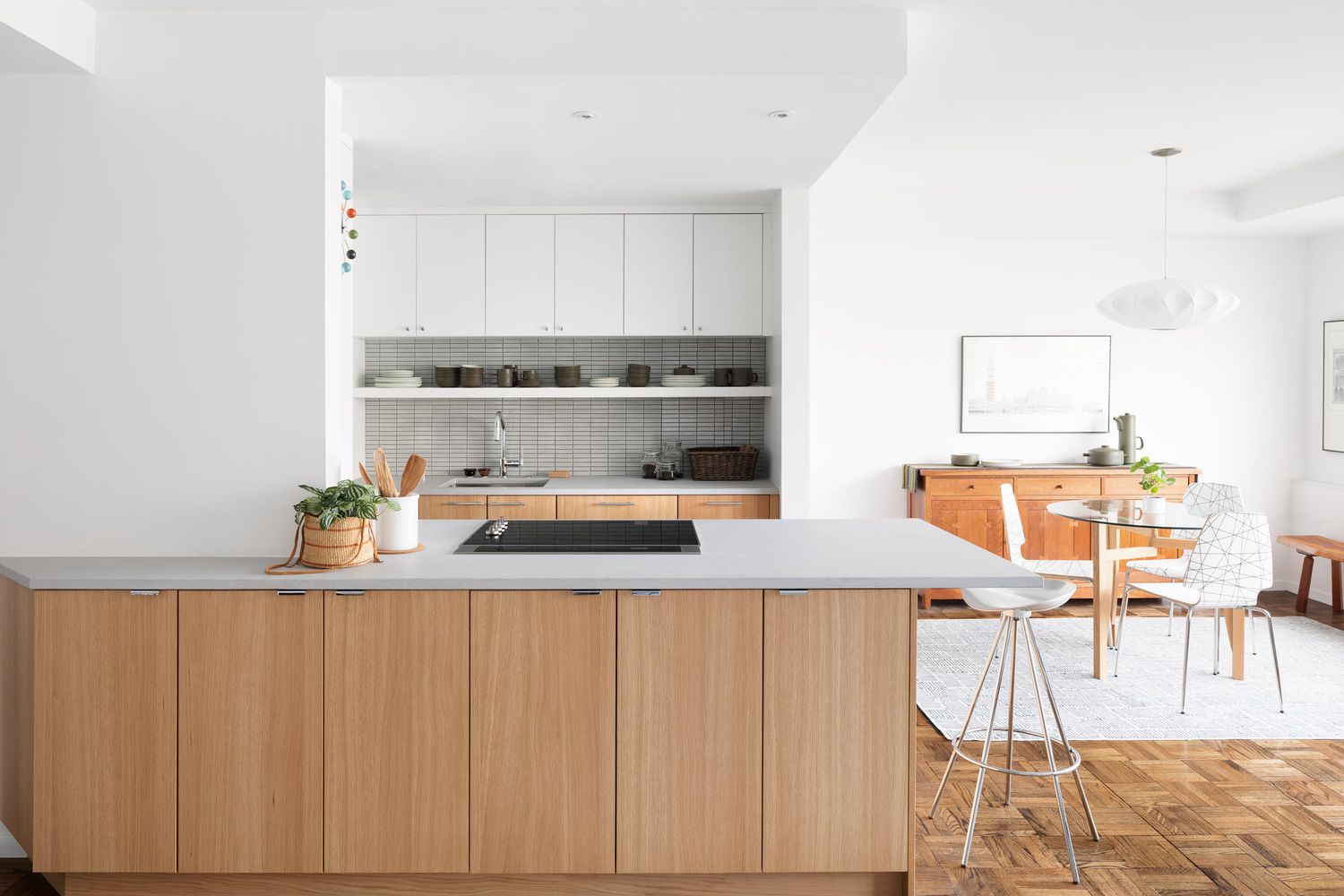
White and wood kitchen cabinets combine the crisp, clean look of white with the organic warmth of natural wood grain. The most common design approach involves using white upper cabinets paired with wood lower cabinets or a wood-toned kitchen island. This balanced combination is incredibly versatile, working seamlessly across modern, transitional, Scandinavian, and farmhouse styles to create an inviting atmosphere.
The pairing avoids the sterility of an all-white kitchen and the heaviness of all-wood. It’s one of the most enduringly popular kitchen cabinet combinations for exactly that reason.
Popular White and Wood Cabinet Combinations
| Combination | Style | Best Countertop Pairing |
| White uppers + natural oak lowers | Scandinavian / warm modern | White quartz, light grey stone |
| White uppers + walnut island only | Contemporary / transitional | White or grey quartz, honed marble |
| White cabinets + wood open shelving | Modern farmhouse / casual | Butcher block, light quartz |
| All-white cabinets + wood flooring | Classic modern | Carrara marble, white quartz |
| White shaker + medium wood lowers | Transitional / traditional | Soapstone, quartz with grey veining |
| Two-tone: white + dark walnut | Dramatic modern | Dark quartz, light concrete look |
Choosing the Wood Tone
The wood tone you choose has a significant impact on the kitchen’s overall feel:
- Light oak / blonde wood – the most versatile pairing. Works in Scandinavian, modern farmhouse, and contemporary styles. Pairs easily with white quartz and light floors
- Medium oak / warm honey – traditional and inviting. Pairs well with white shaker cabinets and butcher block or quartz countertops
- Walnut (medium-dark brown) – dramatic and sophisticated. Best used in smaller doses (island only, lower cabinets) to avoid the kitchen feeling dark
- White-washed or cerused wood – lighter, more casual, works well in beach or relaxed modern aesthetics
Hardware Choices
Hardware brings the white and wood palette together. Popular choices:
- Matte black – contemporary, strong contrast against both white and wood
- Brushed brass / gold – warm, brings out the warmth in wood tones
- Brushed nickel – neutral, works with any combination
- No hardware (push-to-open) – very clean, best in minimalist or Scandinavian kitchens
Backsplash Ideas
| Backsplash | Works With |
| White subway tile | Any white + wood combo – classic and timeless |
| Natural stone / marble slab | Walnut or dark wood + white uppers – elevated look |
| Off-white or warm white zellige tile | Light oak or blonde wood – adds texture, feels artisan |
| White shiplap | White + wood farmhouse kitchens |
| Terracotta or warm earth tiles | Medium wood + white – gives a European feel |
Common Mistakes to Avoid
- Mixing too many wood tones – if your floors are dark walnut, don’t add walnut cabinets; use a complementary lighter wood
- Choosing stark white with very warm wood – cool stark white can clash with honey or golden wood; try an off-white or warm white instead
- Forgetting the flooring – floors need to be considered alongside cabinets; the whole palette should work together
- Overdoing the wood – using wood on every surface loses the contrast that makes the combination work
Final Thoughts
White and wood kitchen cabinets are popular because they balance warmth with cleanliness – a combination that photographs beautifully and ages well. The most versatile approach is white upper cabinets with light oak or natural wood lowers and a wood island. Choose hardware that bridges the two tones and you’ll have a kitchen that feels intentional and timeless.