Most people wash their pillowcases regularly but never think about the actual pillow inside. Pillows absorb sweat and dust mites over time, which can aggravate allergies. Learning how to wash pillows in the washing machine is essential for maintaining a truly clean sleep environment.
The good news: most pillows can be washed in a standard washing machine. Down, down alternative, and synthetic fill pillows are all machine washable. Memory foam and latex pillows are the main exceptions — they require hand washing or spot cleaning.
Here’s exactly how to do it without ruining your pillows.
Before You Start — Check the Care Label
Always check the care label first. Look for:
- “Machine washable” — you’re good to go
- “Spot clean only” — don’t machine wash; spot treat with mild detergent and water
- “Dry clean only” — take it to a professional
- “Hand wash” — usually memory foam or latex; wash in a bathtub with gentle soap
If the label is worn away, use this general guide:
| Pillow Type | Machine Washable? | Notes |
| Down | Yes | Gentle cycle, warm water |
| Down alternative / polyester | Yes | Gentle or normal cycle |
| Buckwheat | No | Remove fill, wash casing only |
| Memory foam | No | Spot clean or hand wash only |
| Latex | No | Spot clean or hand wash only |
| Microfiber | Yes | Gentle cycle, cold or warm |
Step-by-Step: How to Wash Pillows in the Washing Machine
Step 1 — Check for Damage First
Before washing, inspect the pillow for:
- Tears or holes in the ticking (outer fabric) — these will cause filling to escape into the machine
- Yellow staining — this will wash out in most cases but note the severity
If there are small tears, either hand-stitch them closed before washing or spot clean instead.
Step 2 — Wash Two Pillows at a Time
This is important for front-loading or top-loading machines without agitators. Washing two pillows together keeps the machine balanced and prevents the pillows from being thrown around unevenly, which can damage the fill or the machine.
Step 3 — Use the Right Settings
| Setting | What to Choose |
| Cycle | Gentle or delicate (for down); Normal (for synthetics) |
| Water temperature | Warm — hot water can damage fill; cold is less effective at killing dust mites |
| Spin speed | Low or medium — high spin can compact and damage fill |
| Extra rinse | Yes — always add an extra rinse cycle for pillows |
Step 4 — Use the Right Amount of Detergent
Use less detergent than you think you need — about half your normal amount. Pillows are bulky and trap soap residue easily. Too much detergent leaves a soapy residue in the fill that’s difficult to rinse out fully and makes pillows stiff.
For down pillows: Use a down-specific detergent (Nikwax Down Wash or similar) or a very small amount of mild liquid detergent. Avoid powder — it clumps in down fill.
Step 5 — Run an Extra Rinse Cycle
After the wash cycle completes, run an additional rinse-only cycle. This ensures all detergent is fully removed from the fill. This step is especially important for down pillows.
Drying Pillows — This Part Matters Just as Much
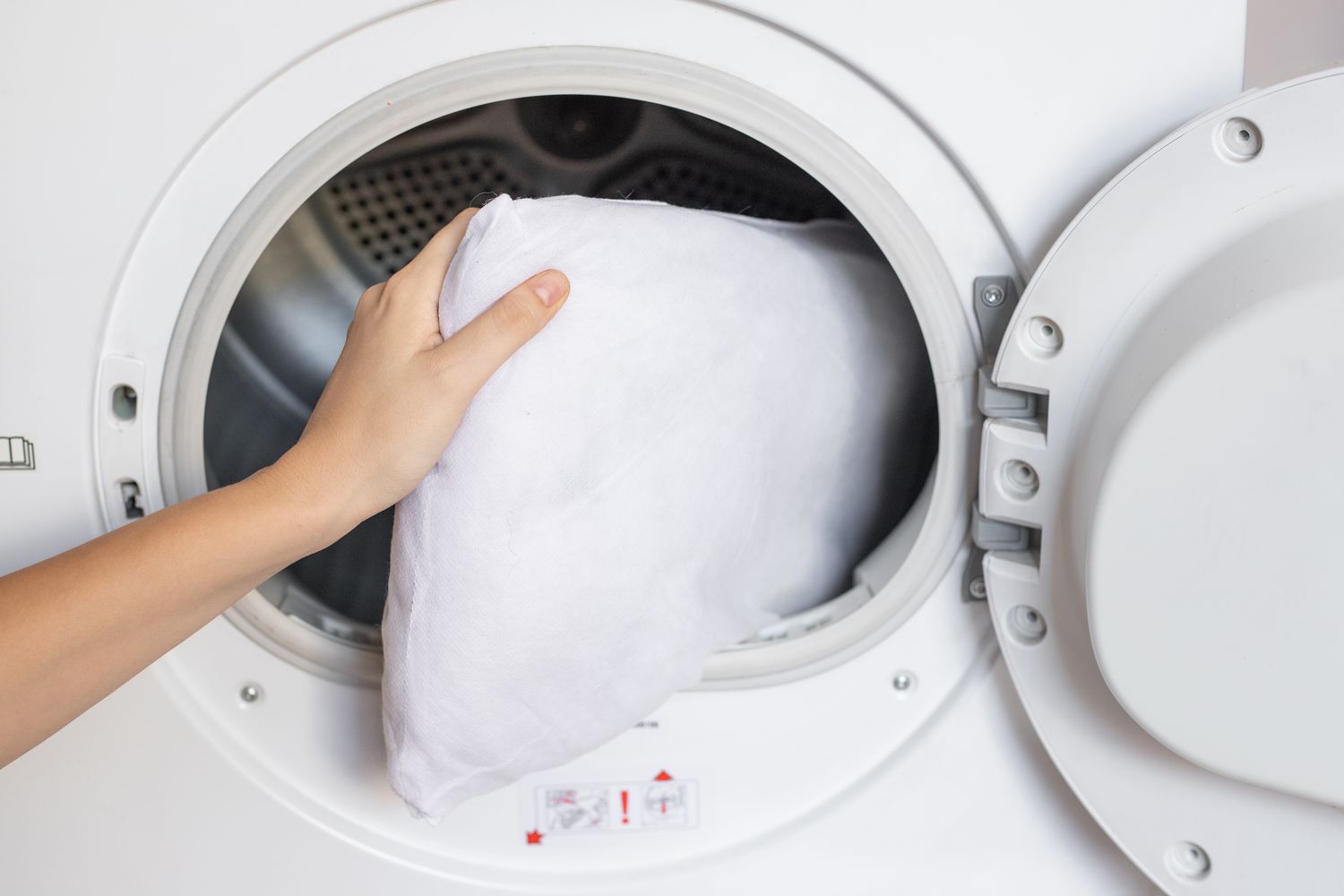
Improper drying is where most people go wrong. A pillow that isn’t dried thoroughly at the center will develop mold or mildew inside — even if it feels dry on the outside.
In the Dryer (Preferred Method)
| Setting | What to Choose |
| Heat | Low to medium (not high — damages fill) |
| Time | 2–3 cycles of 30–45 minutes each |
| Trick | Add 2–3 wool dryer balls or clean tennis balls |
The dryer ball trick: Toss 2–3 wool dryer balls (or clean tennis balls in a sock) into the dryer with the pillows. They bounce against the pillow, break up clumps in the fill, and significantly reduce drying time. This is especially important for down pillows, which can clump and dry unevenly without it.
Check for dryness: After the first 45-minute cycle, take the pillows out and squeeze them firmly. If you feel any cool or damp spots in the center, put them back for another cycle. A pillow that seems dry on the outside but is damp inside is a mold risk.
Plan for 2–3 full dryer cycles for most pillows, and don’t rush the process.
Air Drying (If No Dryer Access)
- Place pillows flat on a clean surface in a well-ventilated area or in direct sunlight
- Flip every hour
- Manually fluff and break up clumps regularly
- Expect 6–12+ hours for full drying
- Sunlight is a natural sanitizer and deodorizer — outdoor drying is worth it when the weather allows
How Often Should You Wash Pillows?
| Use Scenario | Recommended Frequency |
| Primary sleeping pillow | Every 3–6 months |
| Guest pillow (occasional use) | Every 6–12 months or after each guest stay |
| Decorative pillow (no pillow cover) | Every 3–4 months |
| Pillow used by someone with allergies | Every 1–2 months |
Signs It’s Time to Replace Rather Than Wash
Washing only helps so much. Replace your pillow when:
- It folds in half and doesn’t spring back when released (down/synthetic fill is gone)
- It still smells after washing
- It’s lumpy and uneven even after washing and drying
- It’s more than 2–3 years old (synthetic) or 5 years old (down)
Quick Troubleshooting
| Problem | Solution |
| Pillow is lumpy after drying | Run another dryer cycle with dryer balls |
| Pillow smells after washing | Re-wash with a small amount of white vinegar added to rinse |
| Fill has clumped in one area | Knead and fluff manually while still warm from dryer |
| Pillow is stiff after drying | Slightly damp-dried; put back in dryer for 20 more minutes |
Bottom Line
Washing pillows in the washing machine is simpler than most people assume — the key details are using less detergent than you think, always adding an extra rinse cycle, and drying thoroughly with dryer balls until there’s absolutely no moisture remaining in the center. Skip any one of these steps and the results suffer. Do all three and your pillows come out fresh, fluffy, and genuinely clean.