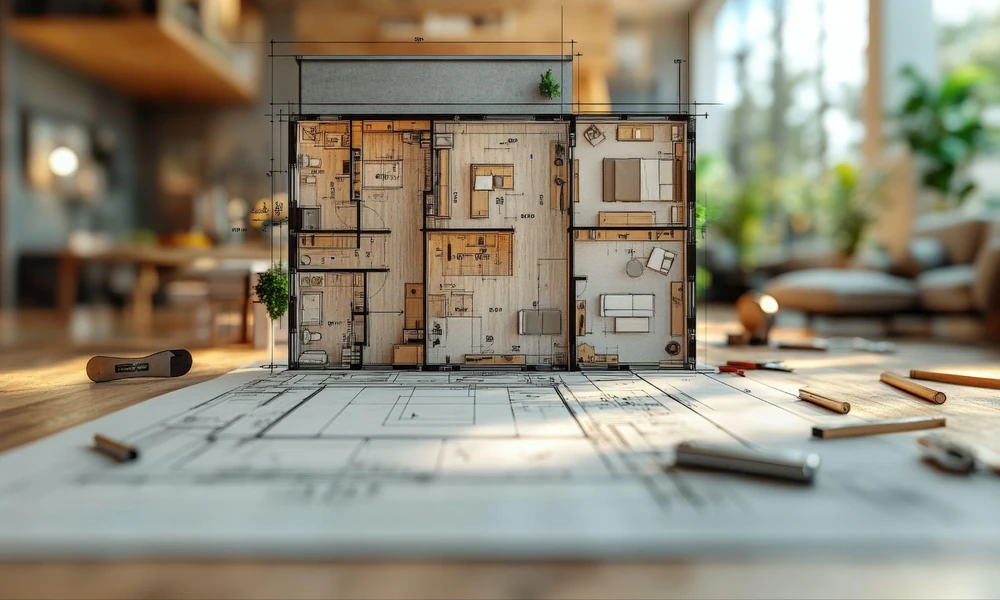
Moving a wall on a sketch takes an eraser and five minutes. Moving that same wall once the concrete has been poured takes demolition, rework, and a considerably larger invoice. Nothing about the wall itself changed between those two moments. What changed was timing, and timing turns out to be one of the biggest, least discussed factors in what a house actually ends up costing.
Why the Earliest Decisions Carry Disproportionate Weight
Architects and builders have long recognised a consistent pattern across projects: the ability to influence a building’s eventual cost is highest right at the start, while the cost of actually making a change climbs steadily the further a project progresses. A layout tweak during early sketches is essentially free. The same tweak once construction documents are finalised means redrawing, re-costing, and possibly redoing work already completed. By the time a house is actually being built, a meaningful share of its final cost has already been quietly locked in by decisions made weeks or months earlier, often without anyone framing them as cost decisions at the time.
Why This Makes Early Consultancy Worth Far More Than It Looks
Getting genuine cost and feasibility input while a design is still just lines on paper, rather than only once drawings are close to final, is exactly where the most valuable adjustments become possible. Early architectural consultancy services can flag a costly structural choice or an inefficient layout while it’s still cheap to rework, rather than discovering the same issue only once it’s already been built into a near-final plan.
Decisions That Are Cheap to Change Early, Expensive Later
A handful of decisions tend to sit right at this exact crossover point, cheap to adjust in the earliest sketches, considerably more disruptive once locked into later drawings or already built:
- Room layout and circulation, moving a wall on paper versus moving one that’s already framed and wired.
- Placement of wet areas like bathrooms and kitchens, which determines plumbing routes that become expensive to reroute later.
- Roof form and structural spans, which affect material choices and structural costs baked in from the foundation stage.
- Window and door positions relative to structural walls, easy to shift on a drawing, considerably harder once openings are framed.
- Ceiling heights and floor-to-floor dimensions, which cascade into staircase design, structural loading, and overall building height limits.
Why the Design Process Itself Should Front-Load This Thinking
Building cost awareness into the earliest stages of design, rather than treating it as a separate conversation that happens once a plan is nearly finished, tends to prevent exactly this kind of late, expensive surprise. Thoughtful architecture home design pairs concept sketches with realistic cost context from the very first meeting, so the decisions that are genuinely cheap to adjust actually get adjusted while they’re still cheap to change, rather than months later when the option has quietly closed.
Why This Timing Problem Catches So Many Homeowners Off Guard
Most people assume cost conversations belong later in a project, once a design actually feels finished and ready to price out properly. In practice, waiting until that point means the cheapest opportunities to control cost have usually already passed, quietly, without anyone framing the moment as significant. A decision that felt like a simple aesthetic preference in week two can end up being the single biggest driver of a budget overrun discovered in month eight, and by then, changing course costs far more than it ever needed to.
Nobody sets out to make an expensive mistake this way. It just happens quietly, one small, seemingly harmless decision at a time, until the sum of them shows up in a number nobody was expecting.
The most expensive mistakes in building a house are rarely made during construction itself; they’re made weeks earlier, in decisions nobody realised were actually cost decisions at the time. Treating the earliest design conversations with the same seriousness as the final budget review tends to be one of the more overlooked ways to keep a project genuinely on track.
Want cost thinking built into your design from day one? Contact Meridian Homes before the cheapest decisions have already quietly closed.